Illinois homeowners often ask: can you pour concrete in cold weather? Maybe you need a driveway before winter, or a project timeline doesn't allow waiting for spring. The answer is yes — but with significant precautions that affect cost, scheduling, and long-term durability.
At RCC Masonry & Concrete, we've poured concrete in every condition Northern Illinois throws at us. As experienced concrete service providers, here's what you need to know about cold weather concrete work.
Temperature Requirements
| Temperature Range | Pouring Feasibility |
|---|---|
| Above 50°F | Ideal — standard procedures work perfectly |
| 40°F – 50°F | Good — minor cold weather precautions needed |
| 25°F – 40°F | Possible — full cold weather protection required |
| Below 25°F | Not recommended — risk outweighs benefit |
Risks of Cold Weather Concrete
Cold temperatures create several problems for concrete:
- Freezing before curing: If concrete freezes within the first 24–48 hours, it loses up to 50% of its strength permanently. The water inside expands, disrupting the chemical bonding process.
- Slow strength gain: Concrete cures through a chemical reaction (hydration) that slows dramatically below 50°F. At 40°F, curing takes roughly twice as long. At 25°F, it nearly stops.
- Thermal cracking: Large temperature differences between the concrete surface and interior cause thermal stress cracks, especially when warm concrete is placed on cold ground.
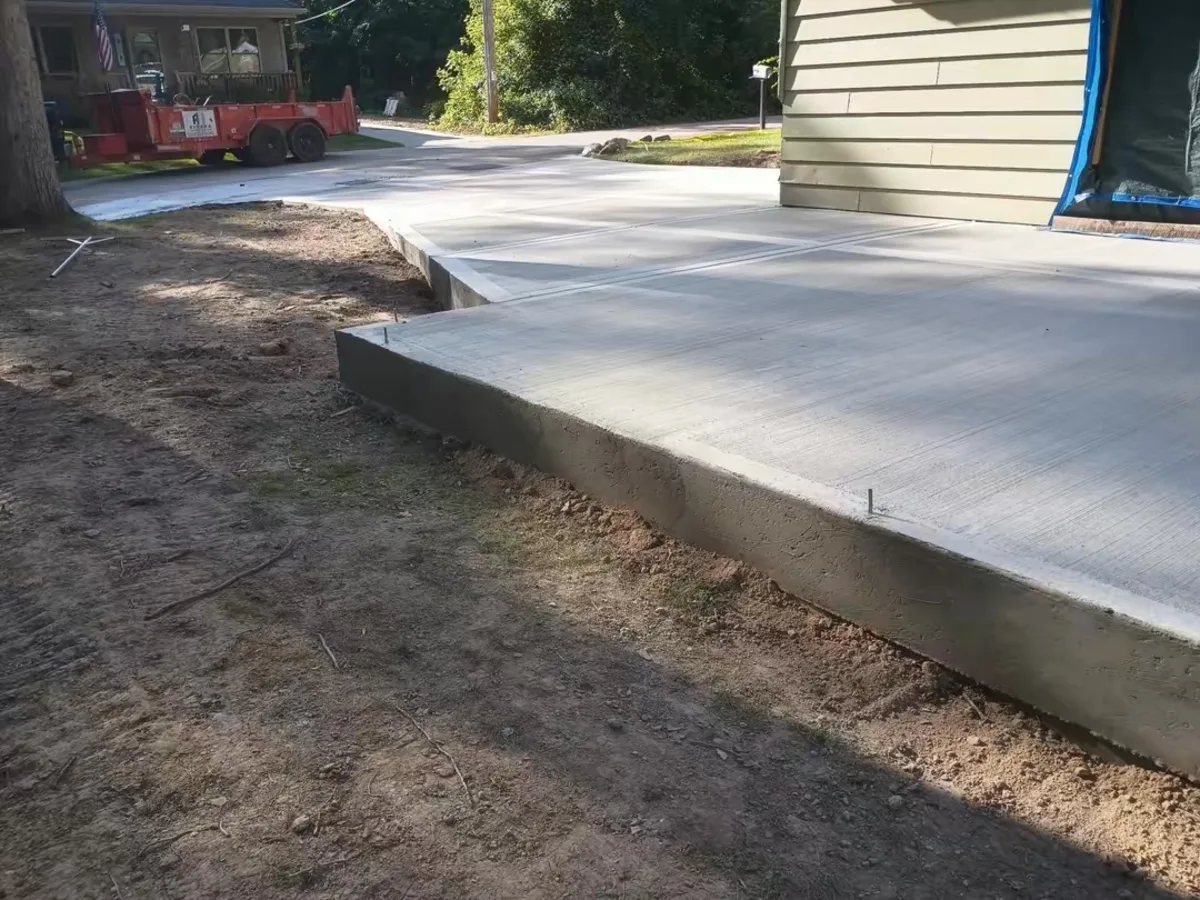
- Frozen sub-base: Pouring on frozen ground is one of the worst mistakes in concrete work. When the ground thaws later, it settles unevenly, causing the slab to crack and sink.
How Contractors Protect Cold Weather Pours
When cold weather pouring is necessary, professional contractors use these protective measures:
- 1.Hot water in the concrete mix — the batch plant heats mix water to deliver concrete at 60–65°F
- 2.Accelerating admixtures — calcium chloride or non-chloride accelerators speed up curing
- 3.Higher cement content — more cement generates more hydration heat
- 4.Ground thawing — heaters or insulating blankets warm the sub-base before pouring
- 5.Insulating blankets — concrete blankets are placed immediately after finishing to trap hydration heat
- 6.Heated enclosures — for critical projects, temporary enclosures with heaters maintain above-40°F conditions
- 7.Extended curing period — cold weather pours need protection for 3–7 days minimum instead of the standard 24–48 hours
Best Time of Year to Pour Concrete in Illinois
For the best results and lowest cost, schedule your concrete project between May and October. This window provides reliable temperatures above 50°F during the day and above 40°F overnight — ideal curing conditions. September and October are particularly good months: moderate temperatures, lower humidity, and stable weather produce excellent concrete.
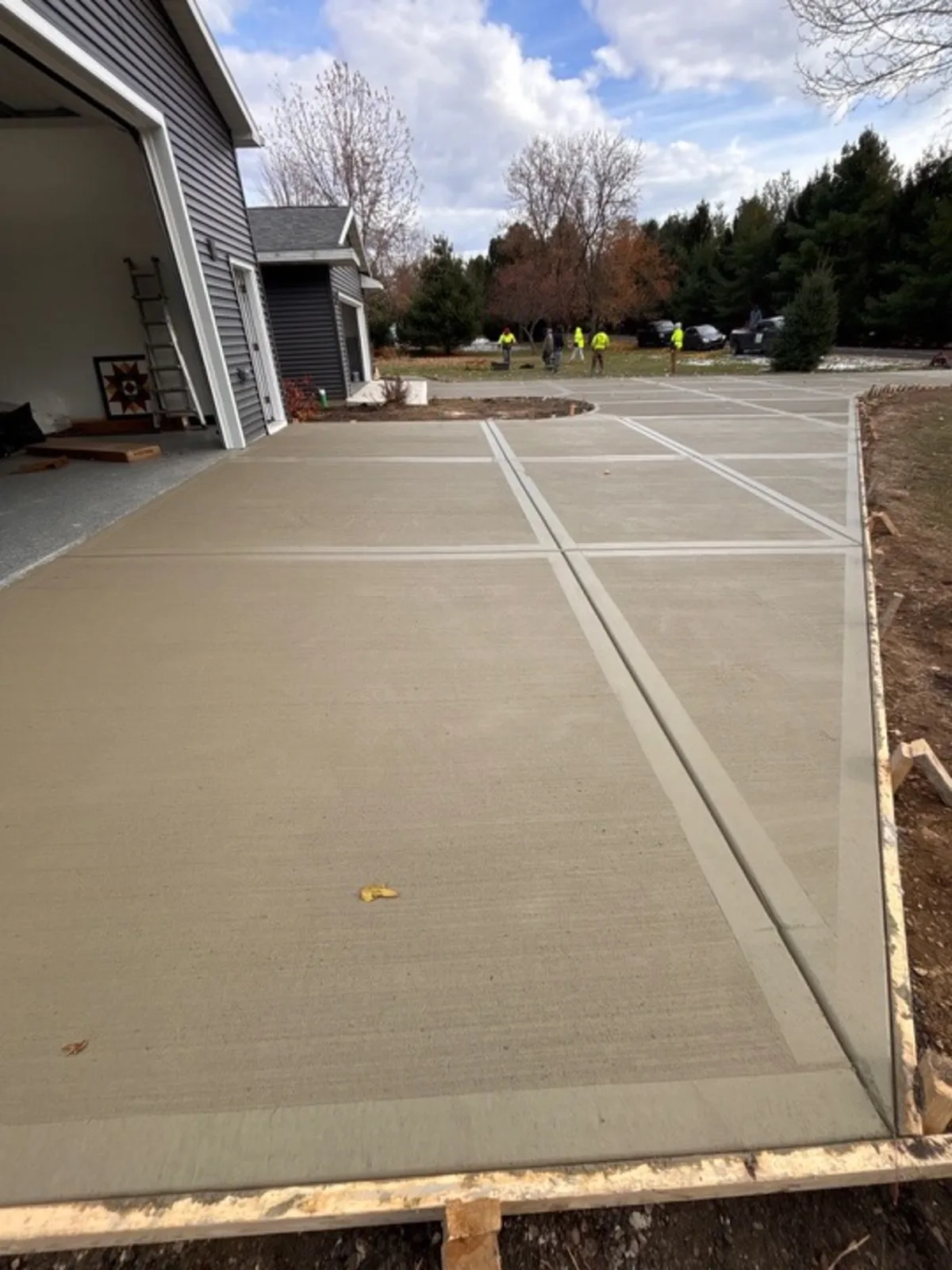
RCC crew finishing a concrete driveway pour in ideal weather conditions
Should You Wait or Pour Now?
Unless your timeline is urgent, waiting for warmer weather is usually the smarter choice. You'll save $1–$3 per square foot in cold weather premiums, eliminate the risk of freeze damage, and get a stronger, more durable result. If you do need to pour in cold weather, hire a contractor experienced with cold weather procedures — this is not the time for a budget-driven decision.
Have questions about timing your concrete project? Call RCC Masonry & Concrete at (224) 441-5284 for expert advice and a free estimate.