Expert Concrete Repair
Cracked, sunken, or crumbling concrete doesn't always need full replacement. Our professional repair services restore structural integrity and curb appeal at a fraction of the cost — saving you time and money across McHenry and Lake County.
What is Concrete Repair?
Concrete repair is the structural restoration of cracked, spalled, or settled concrete surfaces using techniques like epoxy injection, slab leveling, and resurfacing. In Illinois, road salt and freeze-thaw cycles cause rapid concrete deterioration — professional repair can extend a slab's life by 15–25 years at a fraction of replacement cost.
Concrete Repair — Quick Facts
- •Professional concrete repair — crack injection, slab leveling, resurfacing, and joint sealing — saves 40–60% compared to full replacement.
- •Typical cost: Crack injection $300–$800 per crack, slab leveling $500–$1,500 per section, resurfacing $5–$12/sq ft.
- •Most repairs complete in 1–5 days with minimal disruption.
- •All work backed by a 5-year workmanship warranty. Free on-site estimates.
- •Service area: McHenry County, Lake County, and surrounding Northern Illinois communities.
Settling, cracking, and spalling concrete caused by freeze-thaw damage
What's Causing Your Concrete to Fail?
Illinois concrete takes a beating. Harsh freeze-thaw cycles, soil settling, tree root pressure, and poor original pours all contribute to cracks, sinking slabs, and surface deterioration. Left unchecked, small problems quickly become expensive replacements.
The good news? Many concrete issues can be professionally repaired — restoring full structural integrity and extending the life of your existing slab by years or even decades. Knowing when to repair versus replace is the key to saving money.
Common Signs You Need Concrete Repair:
- Hairline or widening cracks across driveways, sidewalks, or patios
- Uneven or sunken slab sections creating trip hazards
- Surface spalling — flaking, pitting, or exposed aggregate
- Water pooling in areas that previously drained properly
- Crumbling or disintegrating edges and control joints
Our Repair Services
From crack injection to full slab leveling, RCC Masonry & Concrete offers a complete range of repair solutions tailored to the specific problem — not a one-size-fits-all approach.
1. Structural Bonding
For cracks, we don't just 'caulk' them. We grind them open and use structural epoxy injections or carbon fiber staples to bond the concrete back together, preventing the crack from returning next winter.
2. Surface Preparation
For resurfacing, we use industrial diamond grinders to remove the top layer of 'dead' concrete. This guarantees the new overlay has a mechanical bond to the original slab, ensuring it won't peel or flake.
3. Polymer-Modified Finish
We apply high-strength, polymer-modified cementitious coatings that are stronger than standard concrete. We finish with a protective sealer to guarantee a uniform, durable, and slip-resistant surface.
Spall & Surface Repair
Flaking and pitting surfaces are ground down and patched with high-strength repair mortars that match your existing concrete color and texture.
Joint Sealing
Deteriorated control joints and expansion joints are cleaned and resealed with flexible, weather-resistant sealants to prevent water intrusion and weed growth.
Repair vs. Replace Assessment
Not sure what your concrete needs? We provide honest assessments — recommending repair when it makes sense and replacement only when structurally necessary.
Expert Insight: Why Concrete Deteriorates Faster in McHenry & Lake County
Concrete deterioration in Northern Illinois follows a predictable pattern driven by our unique combination of freeze-thaw cycling, road salt exposure, and clay soil instability. Understanding these mechanisms is the difference between choosing a repair method that lasts and one that wastes your money. The most common failure we see in McHenry and Lake County is surface scaling — the top layer of concrete flaking off in thin sheets, often after just 2-3 winters. This almost always indicates the original concrete was either finished too aggressively (overworked with a steel trowel, which seals the surface and traps bleed water) or poured without adequate air entrainment.
De-icing salts dramatically accelerate concrete damage. When rock salt dissolves into the surface, it lowers the freezing point of water unevenly — creating pockets of ice and liquid water at different depths within the concrete. This "salt scaling" phenomenon generates internal pressures far greater than simple freeze-thaw alone, literally popping the surface apart in flakes and patches. Homes on main roads in Crystal Lake, Huntley, and Barrington see 3-5x faster surface deterioration than homes on quiet residential streets, purely due to salt exposure from snowplows.
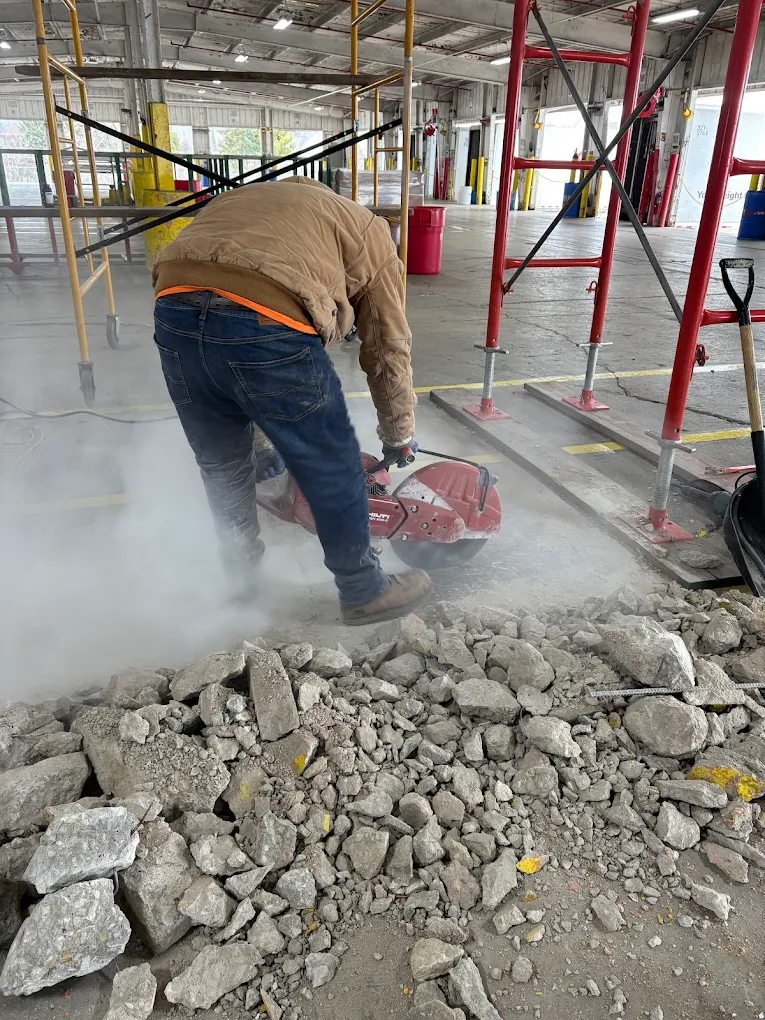
For repair, we match the solution to the damage type. Surface scaling under ¼" deep responds well to polymer-modified overlay — a thin (⅜" to ½") cementitious coating that bonds chemically to the existing concrete and restores a smooth, air-entrained surface. Structural cracking from soil settlement requires routing the crack, injecting flexible polyurethane caulk (not rigid epoxy, which will crack again with soil movement), and addressing the drainage or soil issue causing the settlement. For spalled or crumbling edges, we saw-cut beyond the damaged area and pour a bonded repair using a concrete bonding agent and low-shrinkage repair mix.
The critical factor most homeowners miss: repair timing. In our climate, concrete repairs must be performed when temperatures will stay above 50°F for at least 7 consecutive days — typically May through mid-October. Repairs done in marginal weather (below 45°F overnight) will not cure properly and will fail within the first winter. We also apply a penetrating silane sealer after every repair to block future moisture intrusion, extending the repair life by an estimated 40-60% compared to unsealed surfaces.
Concrete Repair Methods: Matching the Fix to the Damage Type
Not all concrete damage is the same, and not all repair methods work for every situation. Using the wrong approach in our freeze-thaw climate wastes money and often fails within the first winter. Here's how we diagnose and match repair method to damage:
| Damage Type | What It Looks Like | Repair Method | Materials We Use |
|---|---|---|---|
| Surface Scaling | Top layer flaking off in thin sheets, rough texture | Polymer-modified overlay (⅜"–½") | Cementitious overlay with polymer bonding agent; air-entrained to resist future scaling |
| Structural Cracking | Cracks wider than ¼", often diagonal, may have vertical offset | Routing + flexible polyurethane fill | Flexible (not rigid) sealant accommodates ongoing soil movement; routed to ½" width for proper adhesion |
| Spalled Edges & Corners | Crumbling or broken concrete at slab edges, step noses, or joints | Saw-cut & bonded partial-depth repair | Saw-cut 1" beyond damage, apply bonding agent, pour low-shrinkage repair mix with fiber reinforcement |
| Settlement/Sinking | Slab has dropped creating trip hazards, water pooling | Mudjacking or polyurethane foam lifting | Hydraulic lifting to original grade; polyurethane foam is lighter and more precise for Lake County's clay soils |
| Pop-Outs | Small cone-shaped holes in surface, often with a pebble at the bottom | Fill with non-shrink repair mortar | Caused by soft aggregate particles absorbing water and expanding; cosmetic repair + sealer prevents recurrence |
| Full-Depth Failure | Entire slab sections crumbling, multiple intersecting cracks, rebar exposed | Remove and replace (full tear-out) | When repair cost exceeds 50% of replacement cost, full tear-out with proper sub-base is the better investment |
Post-Repair Sealing: The Step That Extends Repair Life by 40-60%
After every concrete repair, we apply a penetrating silane sealer to the repaired area and surrounding concrete. This invisible sealer bonds chemically with the concrete matrix and blocks water from penetrating the surface — the primary cause of freeze-thaw damage in Northern Illinois. A sealed repair lasts 40-60% longer than an unsealed one because it eliminates the moisture that drives the freeze-thaw destruction cycle. We recommend reapplication every 3-5 years for maximum protection.
Areas We Serve
Professional concrete repair services across McHenry & Lake County, IL.
Stop the Damage Before It Spreads.
A small crack today can become a full slab replacement tomorrow. Get a professional assessment and save thousands with timely concrete repair from RCC Masonry & Concrete.
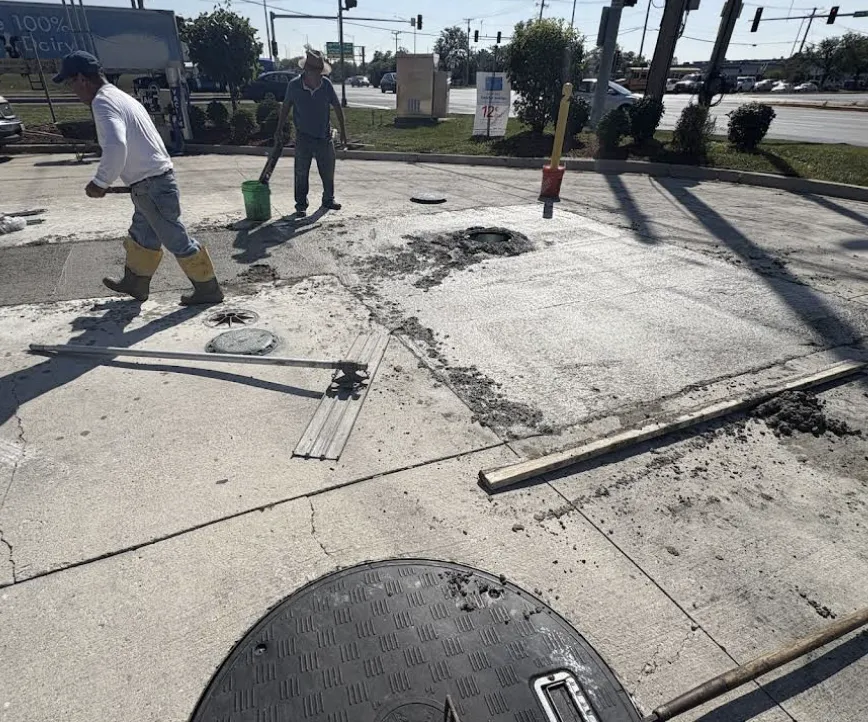
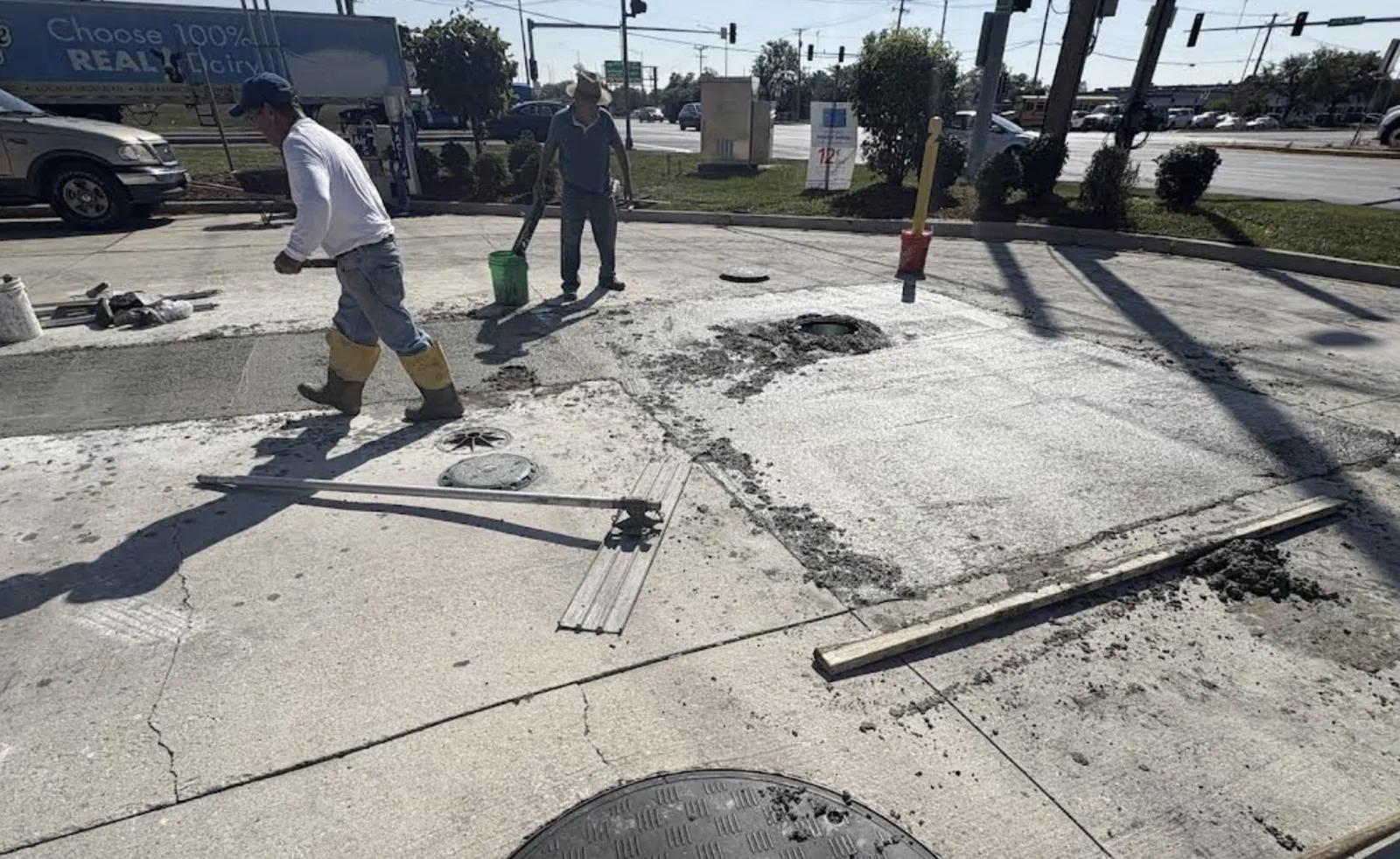
Expert Repair Work
See the difference professional patching and structural bonding makes for failing concrete.
Materials We Use
Professional-grade repair materials that restore structural integrity and outlast the original concrete.
Epoxy Injection Systems
Two-part structural epoxies injected under pressure into cracks, bonding concrete back together with strength exceeding the original slab.
Polyurethane Foam
Expanding foam injected beneath sunken slabs to lift and level them without excavation — a fast, minimally invasive solution for settling concrete.
Polymer-Modified Overlay
High-strength cementitious coatings reinforced with polymers that bond to existing concrete, restoring a smooth, durable surface over spalled areas.
Carbon Fiber Staples
Industrial carbon fiber stitching embedded across cracks to prevent further movement and provide permanent structural reinforcement.
Hydraulic Cement
Fast-setting, water-resistant cement used for patching and filling voids in deteriorated concrete, especially in wet or below-grade applications.
Penetrating Sealers
Silane/siloxane sealers that penetrate the concrete surface to block water intrusion and protect against freeze-thaw damage and salt exposure.
Common Concrete Repairs We Handle
The most frequent concrete problems we fix for homeowners and businesses across Northern Illinois.
Slab Cracks & Fractures
Hairline to wide cracks caused by freeze-thaw cycles, soil movement, or poor original installation — repaired with epoxy injection or carbon fiber staples.
Settling & Sunken Slabs
Sections of driveway, sidewalk, or patio that have sunk due to soil erosion or compaction — lifted and leveled with polyurethane foam injection.
Surface Spalling & Flaking
Concrete surfaces that are pitting, flaking, or exposing aggregate — resurfaced with polymer-modified overlays for a smooth, durable finish.
Control Joint Failure
Deteriorated or missing joint sealant that allows water infiltration, weed growth, and accelerated freeze-thaw damage between slab sections.
Edge Crumbling & Deterioration
Driveway and sidewalk edges breaking apart from salt exposure, snowplow contact, or poor original forming — rebuilt with high-strength repair mortar.
Water Pooling & Drainage Issues
Improper grading or settled slabs causing standing water that accelerates deterioration — corrected by leveling and regrading the affected areas.
Cost Expectations
Repair costs a fraction of full replacement — here's what to expect in the McHenry County area.
Crack Injection (Epoxy)
Per crack — structural bonding for hairline to moderate cracks.
Slab Leveling (Foam Injection)
Per slab section — lifts and levels sunken concrete without replacement.
Surface Resurfacing / Overlay
Polymer-modified overlay to restore spalled or deteriorated surfaces.
Joint Sealing & Repair
Clean, fill, and seal deteriorated control and expansion joints.
Edge Repair & Patching
Rebuild crumbling edges and damaged corners with high-strength mortar.
Full Slab Repair (Complex)
Multi-method repair combining injection, leveling, and resurfacing.
Prices are estimates and vary based on project scope, materials, and site conditions. Contact us for a free, no-obligation quote.
Frequently Asked Questions
Everything you need to know about concrete repair.
Still Have Questions?
Contact us directly — we're happy to answer any concerns and discuss your specific repair needs.
Call (224) 441-5284