Before starting any concrete project, one of the first questions homeowners ask is: do I need a permit? The answer varies by municipality, but in most McHenry and Lake County towns, the answer is yes — for most significant concrete work.
At RCC Masonry & Concrete, we handle permits for our concrete services customers regularly. Here's what you need to know about concrete permits in Illinois.
When Is a Permit Required?
While specific requirements vary by municipality, here are the general rules across McHenry and Lake County:
Usually Requires a Permit
- • New driveway installation or full replacement
- • Patio construction over 200 sq ft (varies by town)
- • Sidewalk replacement along public right-of-way
- • Garage slab or foundation work
- • Retaining walls over 4 feet tall
- • Any work affecting public drainage
- • Commercial concrete projects
Usually Does NOT Require a Permit
- • Small patio pads under 200 sq ft (varies by town)
- • Concrete repair or resurfacing of existing surfaces
- • Stepping stone paths
- • Small garden retaining walls under 4 feet
- • Patching and crack repair
- • Sealing and cosmetic coating
The Permit Process in McHenry & Lake County
Here's what the typical permit process looks like:
- 1.Submit an application to your local building department with project details, property survey or plat, and a site plan showing the proposed work
- 2.Pay the permit fee (typically $50–$300 depending on project scope)
- 3.Wait for approval (usually 3–10 business days for standard residential projects)
- 4.Display the permit on-site during construction
- 5.Schedule required inspections (usually sub-base and final)
- 6.Receive final approval after passing all inspections
What Happens Without a Permit
Skipping a required permit might seem like a way to save time and money, but the consequences can be significant. Municipalities can issue stop-work orders mid-project, fine you $100–$500 or more per violation, and in worst cases, require you to tear out completed work. Beyond enforcement, unpermitted concrete work creates problems when selling your home — inspectors flag it, buyers negotiate lower prices, and title companies may require remediation.
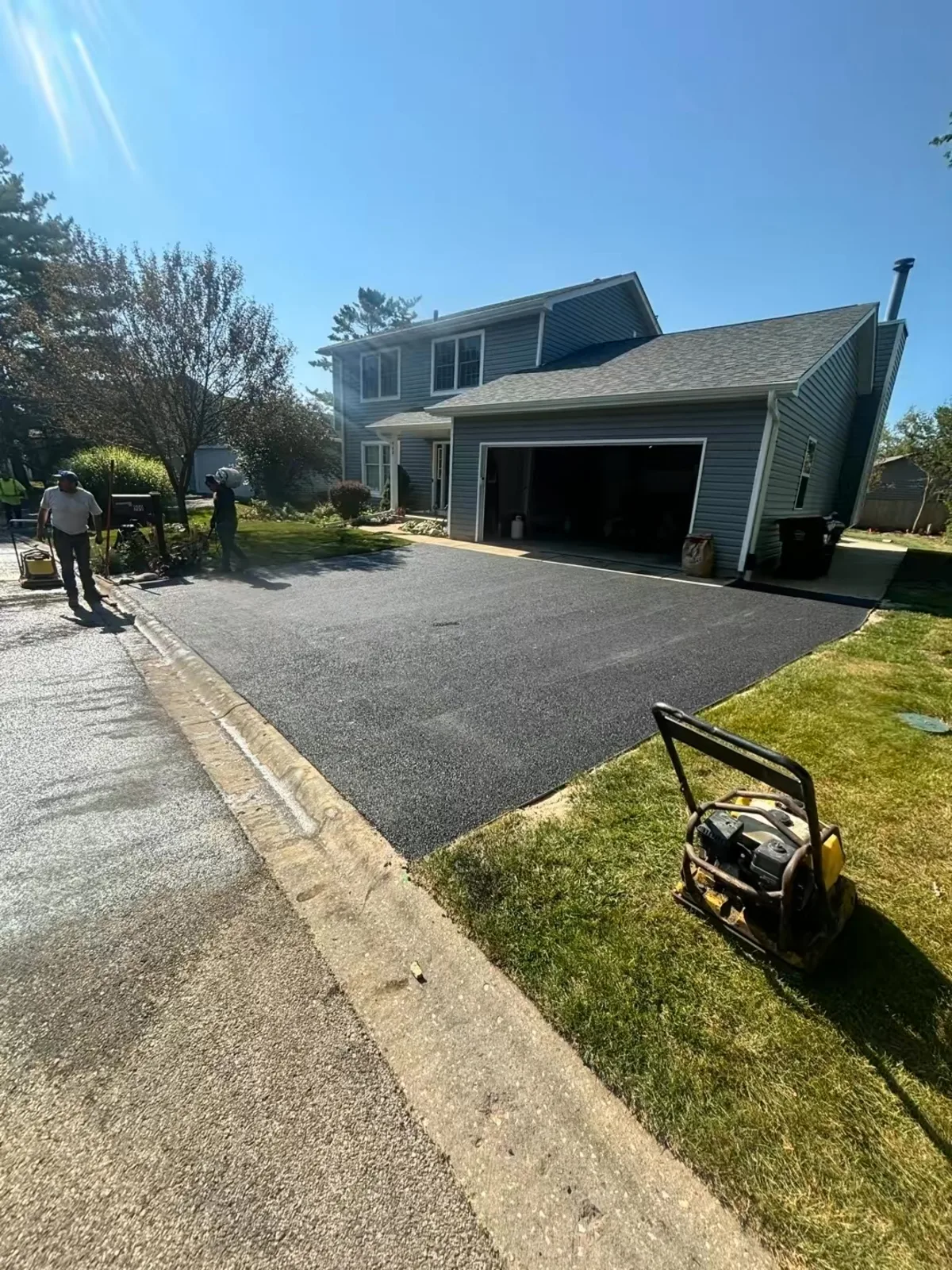
Professional driveway installation — permitted work ensures code compliance
Why Permits Matter Beyond Compliance
Permits aren't just bureaucratic hurdles — they serve a practical purpose. The inspection process ensures your contractor is building to code: proper concrete thickness, adequate sub-base, correct drainage slope, appropriate setbacks from property lines, and no interference with utility easements. These requirements exist because substandard concrete work causes drainage problems, trip hazards, and premature failure.
How RCC Handles Permits
At RCC Masonry & Concrete, we manage the entire permit process for every project that requires one. We prepare the application, submit plans, pay fees (included in our quote), and schedule all inspections. Our customers don't have to visit the building department or navigate permit requirements — we handle it all. Contact us at (224) 441-5284 for a free estimate on your concrete project.