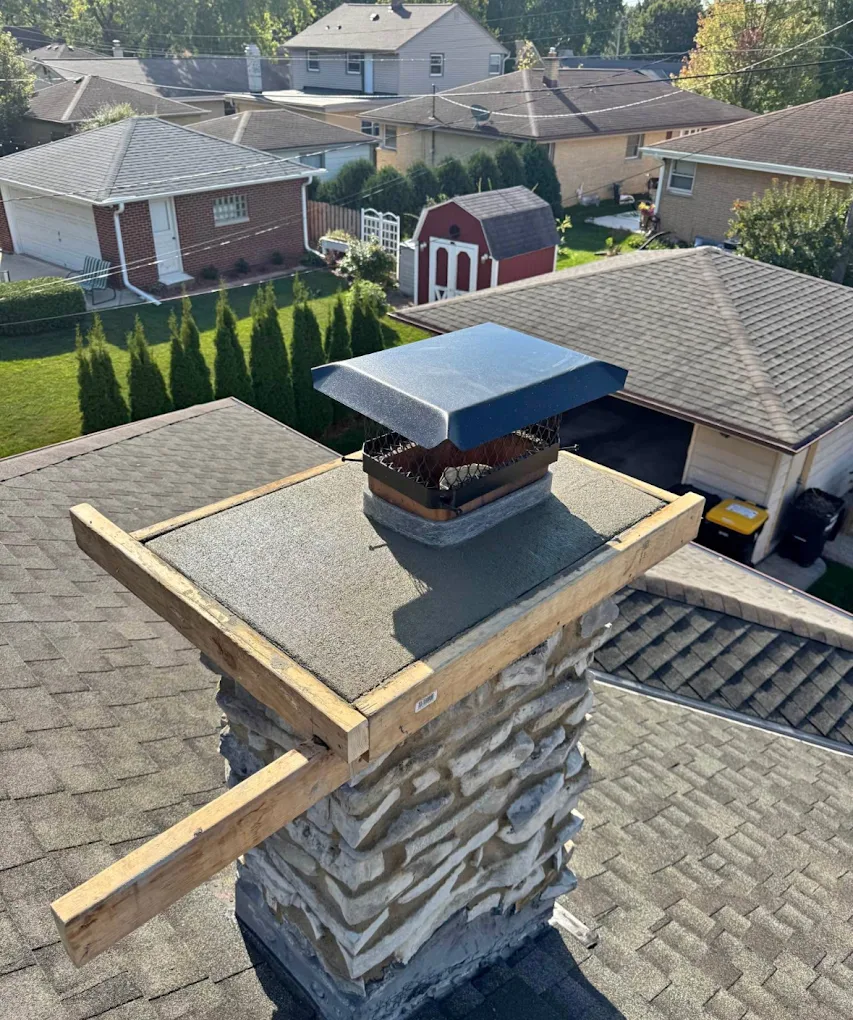
Your chimney is the most vulnerable masonry element on your home — exposed on all sides above the roofline to wind, rain, snow, and extreme temperature swings. How often should it be inspected and repaired? The short answer: inspected annually, with repairs as needed based on what the inspection reveals.
At RCC Masonry & Concrete, we perform chimney inspections and repairs across McHenry and Lake County year-round. Here's the schedule every Illinois homeowner should follow.
Recommended Inspection Schedule
| Inspection Type | Frequency | What's Included |
|---|---|---|
| Level 1 — visual | Annually | Exterior condition, crown, cap, visible flue, flashing |
| Level 2 — detailed | Every 5 years or when buying/selling | Video scan of flue interior, attic examination, detailed report |
| Level 3 — invasive | When damage is suspected | Partial removal of chimney components for hidden damage assessment |
Best Times for Chimney Inspection
In Illinois, there are two ideal inspection windows:
- 1.Early fall (September–October): Before heating season begins, ensure your chimney is safe for use. This gives time to complete any needed repairs before cold weather.
- 2.Early spring (March–April): After winter's worst punishment, assess freeze-thaw damage while weather is mild enough for repairs. This prevents damaged chimneys from deteriorating further through spring rains.
Common Chimney Problems in Illinois
Deteriorated Mortar Joints
Freeze-thaw cycles attack chimney mortar joints aggressively. Because chimneys are fully exposed above the roofline, they experience more severe temperature swings than walls. Mortar deterioration allows water to penetrate the chimney structure, accelerating damage from the inside out. Chimney tuckpointing is typically needed every 15–25 years.
Cracked Chimney Crown
The chimney crown (the cement cap on top) seals the chimney top around the flue. Cracks in the crown — even small ones — channel water directly into the chimney interior. In Illinois, a small crown crack in fall becomes a major structural problem by spring as freeze-thaw cycles widen it. Crown repair or replacement costs $300–$1,500 and prevents thousands in water damage.
Failed Flashing
Flashing is the metal-and-sealant junction where your chimney meets the roof. When flashing fails, water enters the gap and damages the roof deck, ceiling joists, and interior finishes. Flashing should be inspected annually and replaced every 15–25 years or whenever signs of leaking appear.
Spalling Bricks
Water that enters through failed mortar, crown cracks, or missing caps freezes inside the bricks themselves, causing the outer face to pop off (spalling). Severely spalled bricks must be replaced individually. If more than 25% of chimney bricks are spalled, a partial or full rebuild above the roofline is typically recommended.
Signs Your Chimney Needs Repair Now
- Visible cracks in the chimney crown or cap
- White staining (efflorescence) on chimney bricks
- Mortar crumbling or missing from joints
- Brick faces flaking or popping off (spalling)
- Water stains on ceiling or walls near the chimney
- Chimney leaning or tilting (emergency — call immediately)
- Rust stains around the firebox or damper
- Pieces of brick or mortar falling onto the roof
Schedule Your Chimney Inspection
Don't wait for visible damage to have your chimney checked. RCC Masonry & Concrete provides chimney inspections and repair estimates throughout McHenry and Lake County. Call (224) 441-5284 to schedule your inspection today.