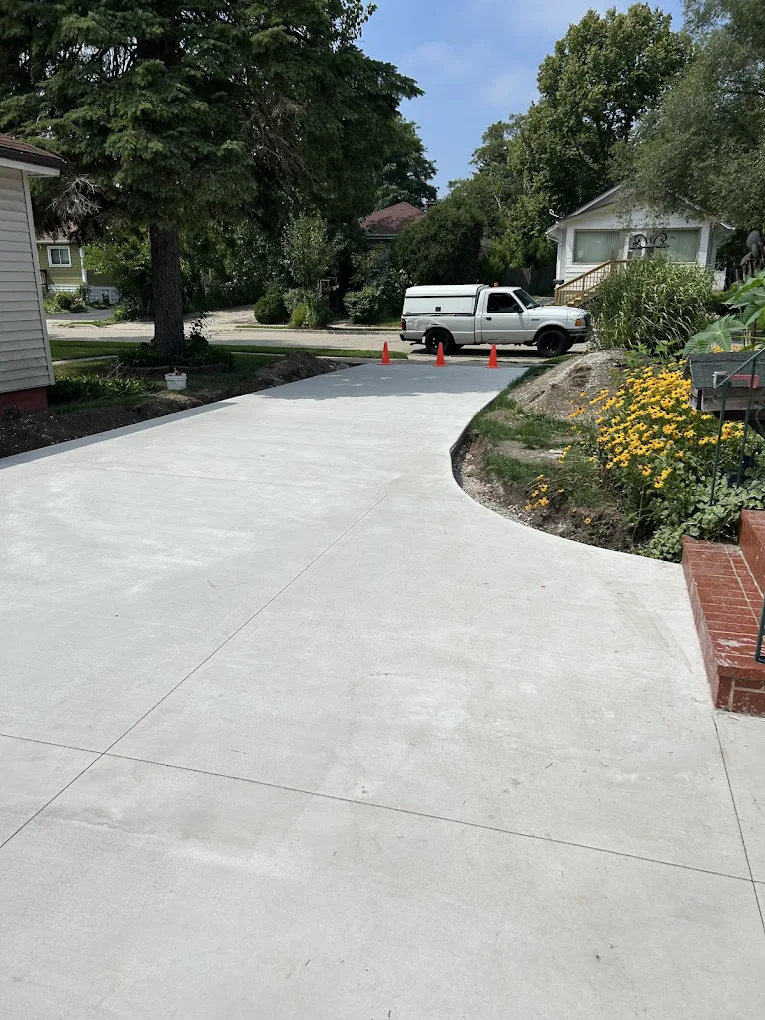
A concrete driveway is one of the largest and most visible investments on your property. In Northern Illinois, where winters deliver relentless freeze-thaw cycles and summer heat brings thermal expansion, proper maintenance is the difference between a driveway that lasts 30 years and one that fails in 10.
At RCC Masonry & Concrete, we've installed and repaired hundreds of driveways across McHenry County and Lake County. Here's the maintenance schedule we recommend to every homeowner.
Spring Maintenance (March–May)
Spring is assessment season. Once the snow melts, inspect your entire driveway for new cracks, spalling, or sections that have settled or heaved. Winter frost heaving can shift concrete slabs, creating trip hazards and opening joints where water will pool. Address any damage before spring rains saturate the sub-base.
- Sweep away all winter debris, salt residue, and sand accumulation
- Power wash the surface to remove stains and embedded grit
- Fill any new cracks with flexible concrete caulk
- Check that all control joints are clean and properly sealed
- Ensure drainage slopes are still directing water away from the garage
Summer Maintenance (June–August)
Summer is the ideal time for sealing and stain removal. Address oil stains promptly — petroleum products break down concrete sealers and can permanently discolor the surface. For stamped concrete, summer is when you should inspect and touch up the color sealer to prevent UV fading.
- Treat oil and grease stains with a degreaser or poultice
- Remove weeds growing in expansion joints
- Apply concrete sealer if it's been 2–3 years since the last application
- Inspect expansion joints for deterioration and replace backer rod/caulk if needed
Fall Maintenance (September–November)
Fall is your last chance to prepare for winter. This is the most important maintenance window of the year — everything you do now directly impacts how your driveway survives the freeze-thaw season.
- Seal any remaining cracks — even hairline ones allow water entry that causes freeze damage
- Apply penetrating sealer if not done in summer (must be applied above 50°F)
- Clear leaves and debris from control joints and edges
- Verify downspouts direct water away from the driveway
- Stock up on CMA or sand for winter traction (avoid rock salt)
Winter Maintenance (December–February)
Winter maintenance is primarily about snow removal and protecting the surface. Use a plastic-edge snow shovel to avoid scratching the concrete. If you use a snowblower, keep the scraper blade raised slightly above the surface. Never use metal shovels or ice picks directly on concrete — they chip the surface and create entry points for moisture.
- Remove snow promptly to prevent ice formation
- Use calcium magnesium acetate (CMA) instead of rock salt
- Never pour hot water on frozen concrete — thermal shock causes cracking
- Avoid piling heavy, compacted snow on driveway edges
When to Call a Professional
DIY maintenance handles 90% of routine care. But some situations require professional assessment: cracks wider than ¼ inch, sections that have settled more than ½ inch, widespread spalling, or drainage problems causing water to pool against your foundation. Professional concrete repair is almost always more cost-effective than full replacement when caught early.
Need help with driveway maintenance or repair? RCC Masonry & Concrete offers free assessments throughout our service area. Call (224) 441-5284 for expert advice.