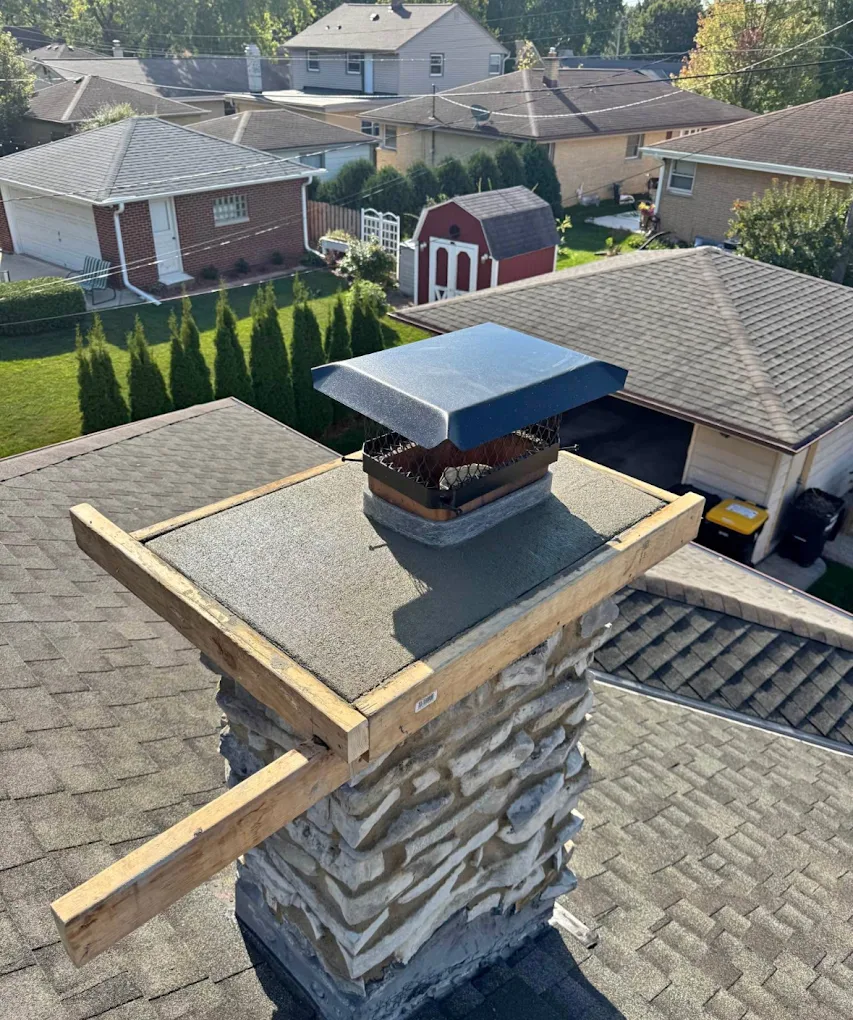
Your chimney takes more punishment than any other masonry element on your home. Exposed on all four sides above the roofline, it endures wind, rain, snow, ice, and temperature extremes that the rest of your masonry is partially protected from. In Northern Illinois, chimney damage is not a question of if — it's a question of when.
RCC Masonry & Concrete has repaired and rebuilt chimneys across McHenry County and Lake County with 15+ years of hands-on field experience. Here are the warning signs we tell every homeowner to watch for.
1. Cracked or Deteriorated Chimney Crown
The chimney crown is the cement cap that seals the top of your chimney around the flue. Cracks in the crown — even small ones — allow water to penetrate directly into the chimney structure. Once inside, freeze-thaw cycles rapidly accelerate the deterioration from within. Check your crown with binoculars from the ground, or have a professional inspect it during your annual chimney service.
2. White Staining (Efflorescence)
White, chalky deposits on chimney bricks mean water is moving through the masonry, dissolving mineral salts and depositing them on the surface. This is an early warning that moisture is infiltrating your chimney. While the stains themselves are cosmetic, the underlying moisture problem will lead to spalling bricks and mortar failure if not addressed.
3. Deteriorated Mortar Joints
Because chimneys are fully exposed to weather, their mortar joints deteriorate faster than wall mortar. Look for recessed, crumbling, or missing mortar between chimney bricks. Tuckpointing the chimney stack every 15–20 years is standard maintenance in Northern Illinois.
4. Spalling or Flaking Bricks
When the faces of chimney bricks pop off in layers, that's spalling — a direct result of freeze-thaw cycles acting on moisture-saturated brick. A few spalled bricks can be replaced individually. But if spalling is widespread, it indicates systemic moisture penetration that needs comprehensive chimney repair.
5. Damaged or Missing Flashing
Flashing is the metal seal between your chimney and roof. When it rusts, separates, or is missing, water runs down the chimney and into your roof structure. Inside, you'll notice water stains on the ceiling around the chimney, damp attic insulation, or dripping during rain. Flashing failure is one of the most common — and most overlooked — causes of chimney-related water damage.
6. Leaning or Tilting Chimney
A chimney that's visibly leaning away from the house is a structural emergency. This typically means the foundation footing has failed, wall ties connecting the chimney to the house have corroded, or frost heaving has shifted the base. A leaning chimney can collapse without warning, posing serious risk to anyone nearby. Call a professional immediately.
7. Interior Signs: Damp Smell, Water Stains, Rusted Damper
Chimney problems often show up inside your home first. A persistent musty smell from the fireplace, water staining on walls near the chimney, a rusted fireplace damper, or wallpaper peeling in rooms adjacent to the chimney — all point to moisture penetrating through failed chimney masonry or flashing.
8. Brick Fragments in Your Yard or Gutters
Finding small pieces of brick or mortar in your gutters or at the base of your chimney means deterioration is actively progressing. These fragments come from spalling bricks and crumbling mortar joints at the top of the chimney — where damage is worst and hardest to see from the ground.
Don't Wait for a Chimney Emergency
Chimney repair caught early is affordable and straightforward. A chimney rebuild after years of neglect costs $5,000–$10,000+. RCC Masonry & Concrete provides free chimney inspections and honest repair estimates throughout our service area. Call (224) 441-5284 to schedule yours.