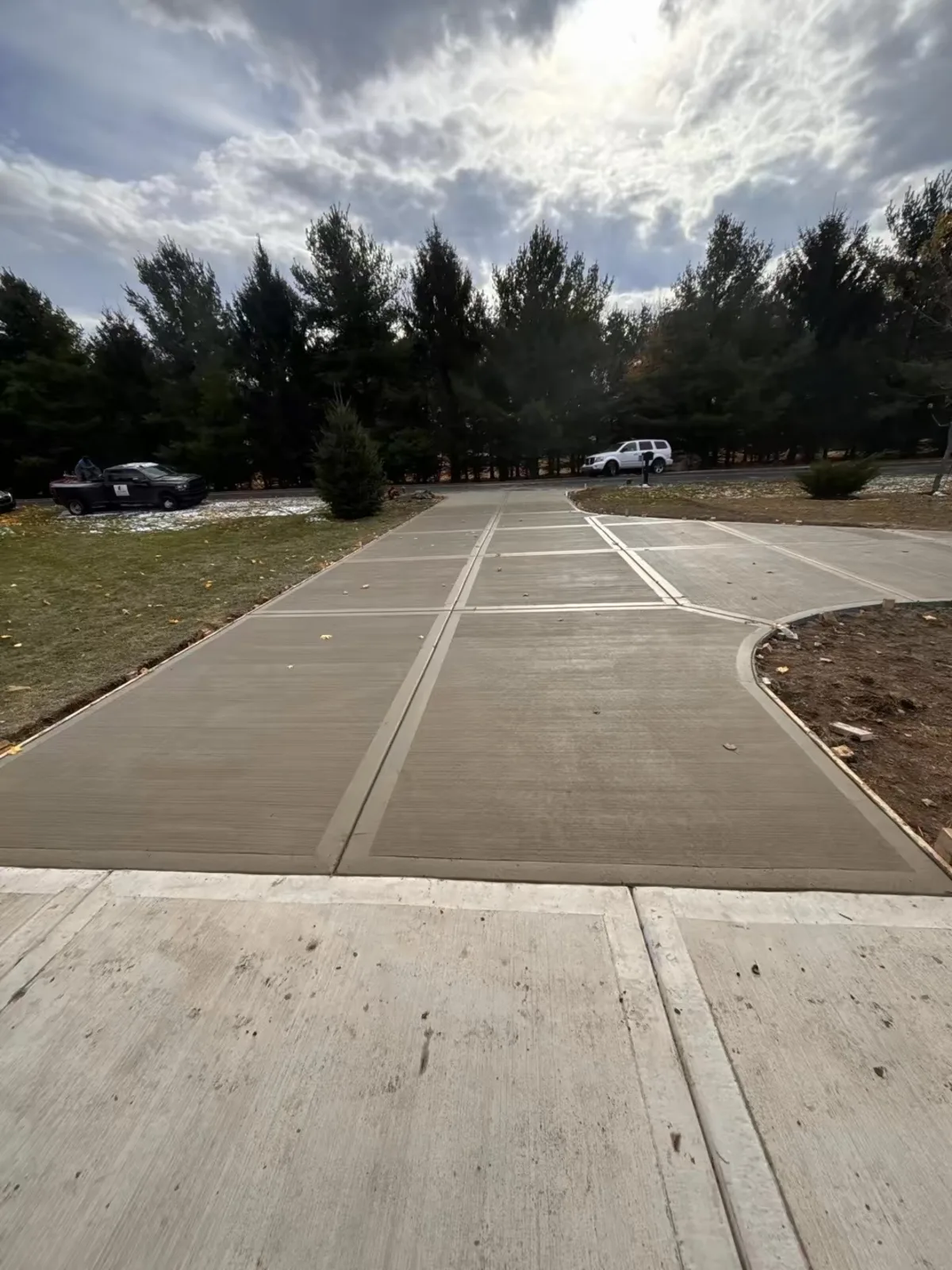
Whether you're planning a new driveway or a commercial parking lot, understanding the differences between commercial and residential concrete is essential for getting the right result at the right price. These aren't just different scales of the same thing — they involve different materials, engineering, reinforcement, and construction methods.
At RCC Masonry & Concrete, we handle both residential and commercial concrete projects across Northern Illinois. Here's what property owners and developers need to know about how these two categories differ — and why it matters for your project.
Concrete Strength (PSI Requirements)
The most fundamental difference is compressive strength, measured in PSI (pounds per square inch). The concrete mix design determines how much weight and stress the slab can handle over its lifetime.
| Application | Typical PSI |
|---|---|
| Residential sidewalks & patios | 3,500 PSI |
| Residential driveways | 4,000 PSI |
| Commercial sidewalks & parking | 4,000–4,500 PSI |
| Commercial truck lanes | 5,000–6,000 PSI |
| Industrial floors & loading docks | 5,000–8,000 PSI |
In Northern Illinois, all exterior concrete should be air-entrained (tiny air bubbles mixed into the concrete) to resist freeze-thaw damage. This is non-negotiable for both residential and commercial applications in the McHenry and Lake County area.
Slab Thickness
Thickness directly impacts load-bearing capacity and long-term durability. Under-specified thickness is one of the most common causes of premature concrete failure.
| Project Type | Residential | Commercial |
|---|---|---|
| Sidewalks | 4 inches | 5–6 inches |
| Driveways / Parking | 4 inches | 5–6 inches |
| Garage / Interior Floors | 4 inches | 6–8 inches |
| Heavy Equipment Areas | N/A | 6–12 inches |
Reinforcement Methods
Reinforcement is where residential and commercial concrete diverge most significantly. The right reinforcement prevents cracking and distributes loads evenly across the slab.
- Residential: Fiber reinforcement + welded wire mesh (WWM) is standard for driveways and patios. Some contractors use #3 rebar on chairs for garage slabs.
- Commercial parking: #4 rebar on 18-inch centers in both directions, placed on chairs to maintain proper positioning in the slab center.
- Heavy commercial: #5 rebar on 12-inch centers, dowel bars at construction and control joints, and sometimes post-tension cables for large monolithic pours.
- Industrial: Engineered reinforcement designs specific to the expected loads — often including steel fiber reinforcement in addition to conventional rebar.
Sub-Base Preparation
A proper sub-base is the foundation of any concrete project. For residential work, we typically excavate 4-6 inches and install compacted CA-6 crushed stone. Commercial projects require deeper excavation (6-12 inches), more aggressive compaction with vibratory rollers, and sometimes geotextile fabric to stabilize poor soil. In areas with expansive clay soils — common throughout McHenry County — commercial sub-base engineering is especially critical to prevent slab heaving and settlement.
Finishing and Surface Options
Residential projects offer the widest range of decorative options — stamped concrete, exposed aggregate, colored concrete, and smooth trowel finishes. Homeowners choose based on aesthetics and personal preference.
Commercial projects prioritize function over form. Broom finishes are standard for slip resistance on sidewalks and parking areas. ADA compliance requires specific surface textures and detectable warning surfaces at curb ramps. Loading areas use heavy broom or even rougher textures for equipment traction. Decorative options are available for commercial storefronts, but durability and code compliance always come first.
Code Compliance and Permits
Residential concrete work in most McHenry and Lake County municipalities requires permits for driveways and sidewalks adjacent to public right-of-way. Commercial projects face significantly more regulatory requirements — ADA accessibility standards, stormwater management plans, fire lane specifications, parking lot striping minimums, and often engineered drawings stamped by a licensed PE. Your concrete contractor should handle or coordinate all permitting requirements.
Cost Comparison
| Factor | Residential | Commercial |
|---|---|---|
| Cost per sq ft | $6 – $15 | $8 – $25+ |
| Sub-base depth | 4–6 inches | 6–12 inches |
| Concrete PSI | 3,500–4,000 | 4,000–6,000+ |
| Permits | Simple | Complex |
| Project timeline | 1–3 days | 1–4 weeks |
Choosing the Right Contractor
Not every concrete contractor can handle both residential and commercial work. Commercial projects require specialized equipment (concrete pumps, laser screeds, large-volume finishing crews), engineering knowledge, higher insurance limits, and experience with ADA and municipal codes. At RCC Masonry & Concrete, we handle both — from residential driveways and patios to full-scale commercial concrete projects across McHenry and Lake County, IL.
Call (224) 441-5284 or request your free estimate online. Licensed, bonded, and insured — with a 5-year warranty on all concrete work.